
Bar in Lima, Peru
Carnaval
535ptsPeruvian-Spirits Counter


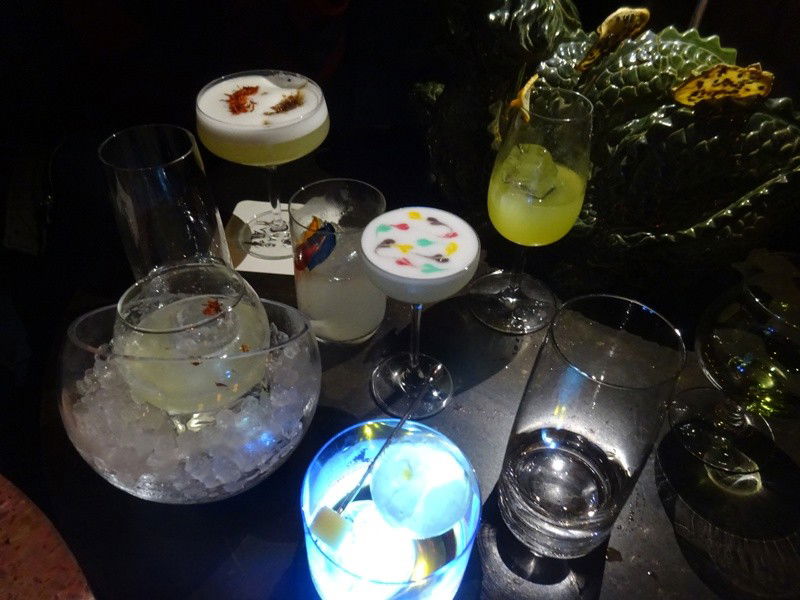
About Carnaval
Carnaval has held a place inside the World's 50 Best Bars top 100 every year since 2019, reaching as high as #13 before settling at #43 in 2023 and #69 in 2024. Positioned in San Isidro, Lima's financial and diplomatic quarter, it represents the precise point where Peruvian biodiversity and serious bartending technique converge. For anyone mapping Lima's bar scene, it is a fixed coordinate.
San Isidro and the Bar That Grew With Lima's Ambitions
Lima's ascent as a serious drinking city did not happen in isolation from its food reputation. The same wave of culinary investment that repositioned Peru on international menus through the 2010s also funded a generation of bartenders who treated native botanicals, fermentation traditions, and altitude-grown ingredients as primary material rather than novelty garnish. In San Isidro, the city's most polished residential and commercial district, that ambition found a home at Carnaval on Av. Felipe Pardo y Aliaga 662. What you notice first, approaching from the street, is a certain restraint in the signage and entrance that signals this is a bar serious about its own categories, not one that needs to announce itself loudly to fill seats.
San Isidro sits apart from the beachside energy of Miraflores and the colonial grit of Barranco, its quieter streets populated by embassies, financial offices, and the kind of restaurants and bars that attract a local professional crowd alongside international visitors who know where to look. In this context, Carnaval occupies a position similar to what a serious cocktail bar holds in any financial-district neighbourhood globally: technically demanding, paced deliberately, and more interested in the conversation at the counter than in social media volume.
What the Award Trajectory Actually Tells You
Few bars in Latin America have accumulated the kind of sustained international recognition that Carnaval has over a five-year window. Entering the World's 50 Best Bars list at #21 in 2020, it had already reached #13 in 2019 — a ranking that placed it in the same breath as bars in London, New York, and Tokyo that had been building their reputations for a decade longer. The subsequent years show a pattern common to high-performing bars in emerging cocktail cities: a gradual repositioning as competition intensifies globally and the field deepens, landing at #43 in 2023, #69 in 2024, and #239 on Top 500 Bars in 2025. Read together, that data set describes a bar that helped define a moment in Peruvian cocktail culture and still holds a position well inside the international peer set.
For comparison, consider where bars of similar vintage and ambition from other South American cities sit in the same lists. Carnaval's 2019 debut at #13 predates the current generation of highly-ranked bars from Buenos Aires, São Paulo, and Bogotá, and the longevity of its presence across multiple ranking cycles is itself a form of evidence. A Google rating of 4.6 across 1,646 reviews suggests the recognition extends beyond industry panels to a broad and consistent local and international audience.
Among Lima's bars with international credentials, Lady Bee, Astrid y Gastón, Curador, and Dédalo each occupy distinct positions in the city's drinking ecosystem. Carnaval's particular place in that set is shaped by its longevity and the era in which it built its reputation, making it a reference point against which newer entries are often measured.
Peruvian Ingredients as the Bar's Core Logic
The editorial angle that makes Carnaval worth examining beyond its award count is its relationship to ingredient sourcing. Peru's biodiversity is not a talking point here; it functions as the structural premise of the drinks program. The country contains a disproportionate share of the world's native potato varieties, chilli species, and Amazonian botanicals, many of which have no commercial presence outside of local markets and specialist importers. A bar operating in Lima has access to raw materials that a bar in, say, Honolulu or Chicago can only approximate through dried or processed forms.
The broader tradition that Carnaval draws from is one shared with Peru's food culture more generally: the idea that the country's geography, stretching from Pacific coastline through Andean altitude to Amazonian lowland, produces flavours that cannot be replicated through substitution. A pisco-based drink built around a highland herb or a coastal citrus is not simply a cocktail with a Peruvian label; it is a drink whose character is defined by the specific conditions of that ingredient's origin. This is the same logic that made Peruvian restaurants globally legible while remaining distinctly local, and Carnaval operates inside that same framework.
Comparison to bars working analogous territory in other cities is instructive. Jewel of the South in New Orleans anchors its program in a deep local herb and spirits tradition. Julep in Houston treats Southern American ingredient culture as a primary creative resource. Superbueno in New York City builds its identity through Latin American flavour references. Carnaval belongs to this category of bars globally: those whose menus function as a form of geographic argument, where the drink is inseparable from the place that produced its components. Within Peru itself, the conversation extends beyond Lima — Cantina Vino Italiano in Cusco and Mapacho Craft Beer Restaurant in Urubamba each approach Andean ingredients through different formats, making the country's bar scene richer in aggregate than any single city venue suggests.
Planning a Visit
Carnaval is located at Av. Felipe Pardo y Aliaga 662 in San Isidro, a short taxi or rideshare ride from Miraflores and roughly twenty minutes from the historic centre depending on traffic. San Isidro's streets are walkable and calm by Lima standards, and the bar sits in a neighbourhood that rewards an evening rather than a quick stop. Given its sustained international recognition and consistent local audience, arriving without a reservation on busier evenings carries obvious risk; checking directly with the venue on current booking options is advisable before visiting. Dress in San Isidro skews smart-casual among its local professional crowd, and Carnaval's room tone aligns with that register rather than with the looser beach-adjacent energy of Barranco. For a fuller picture of where Carnaval sits within Lima's broader dining and drinking options, the EP Club Lima guide maps the city's scene across neighbourhoods and formats.
Frequently Asked Questions
Is Carnaval more formal or casual?
Carnaval sits in San Isidro, Lima's most polished district, and the atmosphere reflects that address without tipping into stiff formality. Smart-casual is the practical register for the room , in line with what the bar's consistent World's 50 Best Bars recognition and local professional clientele suggest. It is not a dress-up occasion, but arriving in beachwear would read out of place.
What cocktail do people recommend at Carnaval?
Specific current menu items are not available for confirmation here, but Carnaval's program is broadly understood to centre on Peruvian spirits (particularly pisco) and native botanicals. Any drink built around those regional ingredients will put you closest to what makes the bar editorially distinct within Lima's scene and relevant to its World's 50 Best Bars trajectory from #13 in 2019 to its current position.
What should I know about Carnaval before I go?
Carnaval has held a place in the World's 50 Best Bars list every year since 2019, reaching as high as #13 before settling in the #40–70 range across subsequent years , a position that places it in a genuinely small global peer set. It is located in San Isidro, Lima's financial district, not in the tourist-heavy Miraflores or Barranco neighbourhoods, so factor in a ten-to-fifteen minute taxi ride. Its 4.6 Google rating across more than 1,600 reviews reflects consistent quality across a broad audience, not just industry recognition.
What is the leading way to book Carnaval?
If the venue maintains an online reservation system or third-party booking platform, that information is not confirmed in current records. Given Carnaval's international profile and the fact that Lima has a strong local bar-going culture in San Isidro, contacting the venue directly through whatever current channels are listed on their official platforms is the most reliable approach. For a bar at this recognition level, same-day walk-ins on weekends carry meaningful risk.
How does Carnaval compare to other bars with Latin American-focused ingredient programs?
Carnaval's positioning within the Latin American cocktail scene is notable for its timing as much as its ranking. Its 2019 entry at #13 on the World's 50 Best Bars preceded the current surge of internationally recognised bars from Buenos Aires and Bogotá, making it one of the earliest South American venues to achieve that tier of recognition. Unlike bars in those cities that draw primarily on European spirits traditions with local flavour accents, Carnaval operates within Peru's distinct framework of pisco, Amazonian botanicals, and Andean altitude ingredients , a combination with no direct equivalent elsewhere in the region.
Recognized By


Similar venues by awards
Related editorial
- Best Fine Dining Restaurants in ParisFrom three-Michelin-star icons to the next generation of Parisian chefs pushing boundaries, these are the restaurants that define fine dining in the world's culinary capital.
- Best Luxury Hotels in RomeFrom rooftop terraces overlooking ancient ruins to Michelin-starred hotel dining, these are the luxury hotels that make Rome unforgettable.
- Best Cocktail Bars in KyotoFrom sleek lounges to hidden speakeasies, Kyoto's cocktail scene blends Japanese precision with global influence in ways you won't find anywhere else.
Save or rate Carnaval on Pearl
Keep this venue in your Pearl passport, rate it after you visit, and track it alongside every other place you collect.