
Bar in Springfield, United States
Buzz Bomb Brewing Co
100ptsDowntown Taproom Brewing
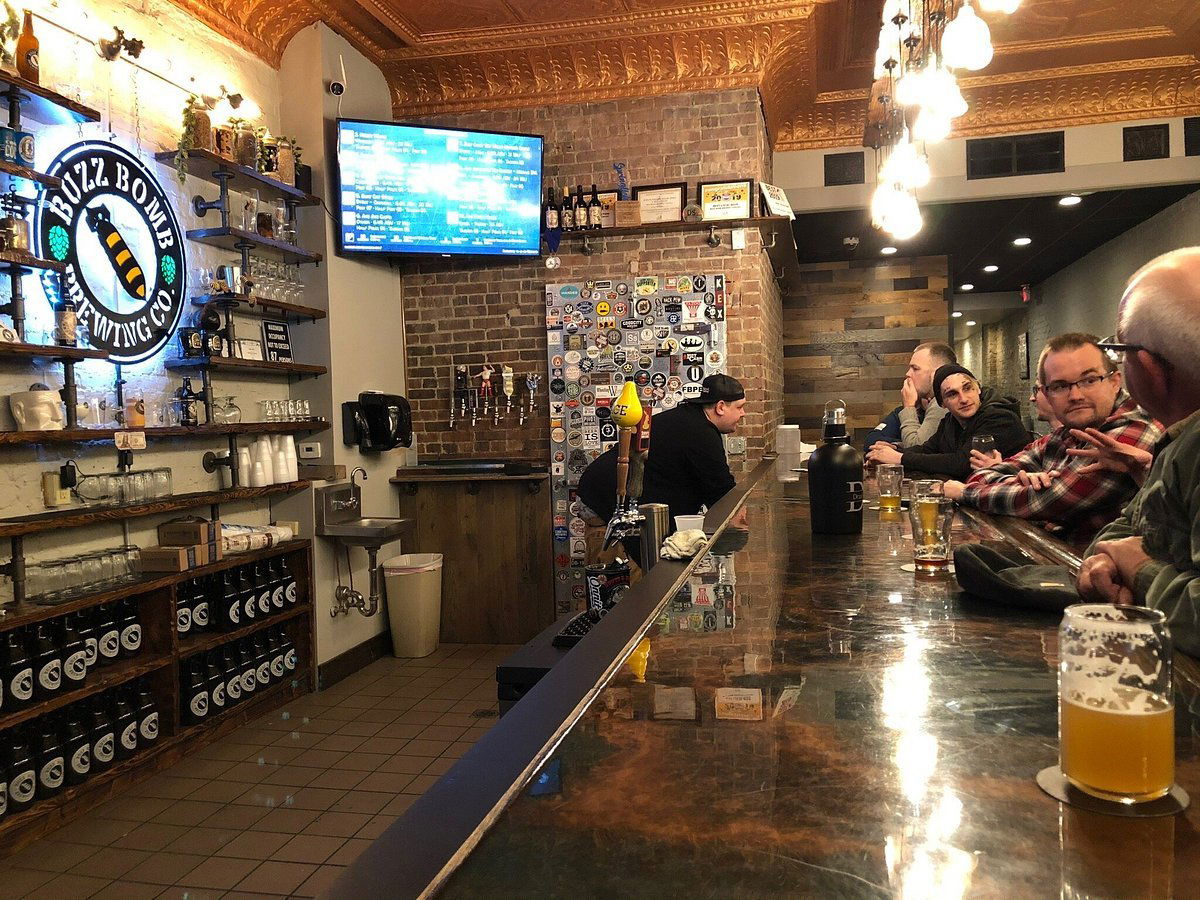
About Buzz Bomb Brewing Co
Buzz Bomb Brewing Co occupies a spot on East Adams Street in downtown Springfield, Illinois, positioning itself within a small-city craft beer scene that punches above its population weight. The brewery format places it alongside a handful of independent operators defining Springfield's drinking culture, distinct from the bar-and-grill majority that dominates the corridor.
East Adams Street and the Craft Beer Belt Running Through Downtown Springfield
The stretch of East Adams Street that runs through Springfield's downtown core has quietly accumulated a concentration of independent food and drink operators over the past decade. It sits within walking distance of the Illinois State Capitol and the Abraham Lincoln Presidential Library, which means foot traffic skews toward visitors with an afternoon to fill rather than locals on a Tuesday night routine. Buzz Bomb Brewing Co occupies 406 E Adams St inside that corridor, and its position in the city's craft beer scene places it alongside a broader American small-brewery model: grain-to-glass production on a modest scale, a taproom format that emphasizes the brewing process as the main attraction, and a rotating tap list that signals what's fermenting rather than what's permanently available.
Craft brewing in mid-sized Midwestern cities has followed a consistent pattern since the mid-2010s: breweries that survived past the initial shakeout phase did so by anchoring to a specific identity, whether that was a flagship style, a sourcing philosophy, or a neighborhood commitment. The Springfield market is smaller and less competitive than Chicago's, which gives individual operators like Buzz Bomb more room to develop a local following without the aggressive differentiation demanded in a saturated urban market. That's a structural advantage, not a quality guarantee, but it's worth understanding when calibrating expectations.
The Ingredient Question: What Goes Into the Glass
Craft brewing's relationship with ingredient sourcing has become one of the category's central editorial debates. At one end of the spectrum, large regional breweries source commodity malt and hop contracts for consistency and cost control. At the other end, a smaller cohort of producers has moved toward named farm hops, heritage grain varieties, and even local water adjustment programs that treat mineral content as a flavor variable. Where a brewery sits on that spectrum tells you more about its product than any marketing language does.
For Buzz Bomb, the publicly available record doesn't confirm specific sourcing partnerships or named ingredient suppliers, so claims in that direction would go beyond what's verifiable. What the craft beer model generally supports is this: taproom-scale production almost always involves shorter supply chains than national brands, and the physical proximity of the brewing operation to the taproom means freshness windows are typically measured in weeks rather than months. That freshness advantage is real and worth noting for anyone accustomed to drinking the same brewery's cans from a retail shelf three states away.
The broader Midwestern brewing context is useful here. Illinois sits within reasonable logistics distance of hop farms in the Pacific Northwest and malting houses in the upper Midwest, and several Illinois craft breweries have made regional grain sourcing a visible part of their brand narrative. Whether Buzz Bomb participates in that trend or operates with a more standard commercial supply chain is a question better answered at the bar than on this page.
How Buzz Bomb Fits Springfield's Drinking Scene
Springfield's independent bar and restaurant scene has enough range to support a genuine evening's itinerary. D'Arcy's Pint operates at the neighborhood-pub end of the spectrum, while Bambinos Cafe on Delmar anchors the cafe-adjacent territory. Italian-American formats appear through venues like Bruno's Italian Restaurant, and the Mexican-American tier is represented by Del Rey Taqueria & Bar. Buzz Bomb operates in a category that none of those occupy: a production brewery with an attached taproom, where the drink program is the entire point rather than a supporting element.
That distinction matters for how you plan a visit. A taproom is a different social format from a cocktail bar or a restaurant with a beer list. The experience is organized around the production cycle, which means the tap selection changes as batches kick and new fermentations finish. Visitors who prefer a consistent menu should understand that variability is a feature of the format, not an operational inconsistency.
For comparison with craft programs operating in larger markets, the model at venues like Kumiko in Chicago or ABV in San Francisco shows how technically ambitious drink programs can become anchors for serious travelers. The scale and ambition differ, but the underlying logic of building a visit around a specific drink format holds across markets. Springfield's version of that is smaller and less decorated, but the category logic is the same. See our full Springfield restaurants guide for a mapped view of where Buzz Bomb sits relative to the rest of the city's options.
What the Taproom Format Delivers
The taproom model, when it works, offers something that neither a bar nor a restaurant fully replicates: direct access to the people making the product, in the space where it's made. That transparency is the format's primary value proposition. In cities with established craft beer cultures, like Denver, Portland, or Asheville, taprooms have become travel destinations in their own right, drawing visitors who treat brewery itineraries the way a previous generation treated winery tours. Springfield is not in that tier, but the format's appeal doesn't depend on the city's size.
The East Adams Street address puts Buzz Bomb within the downtown core that most Springfield visitors are already moving through. That geographic convenience reduces the planning burden considerably. If you're spending an afternoon around the Lincoln sites or the Capitol complex, a stop at a production brewery adds a different register to the day without requiring a separate trip to an outlying neighborhood.
For travelers with a reference point in more developed craft beer markets, venues like Jewel of the South in New Orleans, Julep in Houston, or Bar Leather Apron in Honolulu represent what rigorous drink programming looks like at a national level. Buzz Bomb operates at a different scale and with different aims. The comparison is calibrating, not dismissive: knowing what the category ceiling looks like helps you appreciate where a regional operator fits on the spectrum. Internationally, venues like The Parlour in Frankfurt or Superbueno in New York City show how localized drink identity can anchor a destination's broader reputation.
Planning a Visit: What's Available and What Isn't
The practical picture for Buzz Bomb has some gaps worth acknowledging. A phone number and website are not confirmed in available records, which means the most reliable approach is arriving in person rather than calling ahead or booking online. For a taproom format, that's less of a friction point than it would be for a tasting-menu restaurant: taprooms generally operate on a walk-in basis, and the social format doesn't require the same advance coordination as a seated dinner. Hours are not confirmed in available records, so verifying current opening times through a local search before visiting is advisable, particularly on weekdays when downtown Springfield foot traffic drops.
Pricing for craft taprooms in Midwestern markets typically runs between $5 and $9 per pint for core styles, with specialty and small-batch pours at the higher end of that range. That's a general category reference, not a confirmed price point for Buzz Bomb specifically. The overall cost of a taproom visit in this market is low relative to a full dinner at a comparable price-tier restaurant, which makes it a reasonable addition to a broader Springfield itinerary rather than a stand-alone destination requiring significant planning investment.
Frequently Asked Questions
- What should I drink at Buzz Bomb Brewing Co?
- The production-brewery format means the tap list rotates with each batch, so the most useful answer is to ask on arrival what's freshest or what the brewing team considers the current lead style. Craft taprooms in this format typically run a mix of flagships and seasonal one-offs; the flagships give you a baseline read on the brewery's house character, while the rotating taps reflect what's been fermenting most recently. For context on how ambitious drink programs handle rotating selections, Kumiko in Chicago and ABV in San Francisco show what the category looks like at a higher level of curation.
- What's the defining thing about Buzz Bomb Brewing Co?
- Its position as a production brewery with an attached taproom in Springfield's downtown core is the core distinction. Most of Springfield's independent drink venues operate as bars or restaurant-adjacent formats; Buzz Bomb sits in a separate category where the brewing operation itself is the main event. For a city of Springfield's size, that format is relatively uncommon, which gives it a specific niche in the local scene regardless of awards or critical recognition.
- Should I book Buzz Bomb Brewing Co in advance?
- A confirmed online booking method is not available in current records, and taproom formats generally operate on a walk-in basis. A phone number is also not confirmed. The practical approach is to arrive directly, verify current hours via a local search before going, and treat the visit as a drop-in rather than a reservation-required experience. Weekends and early evenings around major Springfield events may see higher volume.
- What kind of traveler is Buzz Bomb Brewing Co a good fit for?
- Travelers who treat the drink program as the primary reason for a stop rather than a background feature of a meal. The taproom format rewards curiosity about the production process and tolerance for a rotating menu. It fits naturally into a Springfield itinerary that already covers the Lincoln historical sites and wants a different register for the late afternoon. Those looking for a full dinner with a drink program attached would be better served by venues like Bruno's Italian Restaurant or Del Rey Taqueria & Bar.
- Should I make the effort to visit Buzz Bomb Brewing Co?
- If craft beer is a genuine interest rather than a default drink choice, yes. A production brewery in a mid-sized Midwestern city gives you access to fresh, locally made beer in the space where it was made, which is a different experience from ordering the same brewery's cans at a bar across town. The location on East Adams Street keeps the effort low for anyone already in downtown Springfield. It is not a destination that requires a special trip from out of state, but as part of a Springfield day, it adds something the city's other independent venues don't offer.
- Is Buzz Bomb Brewing Co connected to any local brewing tradition or Springfield food history?
- Springfield has a modest but genuine independent food and drink culture that has developed alongside Illinois' broader craft beer growth since the 2010s. Buzz Bomb occupies the production-brewery tier of that scene, operating in a format that reflects the national craft brewing movement's arrival in smaller Midwestern cities. The downtown address connects it to Springfield's commercial core rather than an outlying industrial district, which is a less common positioning choice for small-scale breweries and gives it stronger day-visit accessibility than peers operating in converted warehouse zones. For a fuller read on Springfield's independent venue scene, the EP Club Springfield guide maps the relevant operators across categories.
Related editorial
- Asia's 50 Best Restaurants 2026: The Chairman and Wing Go 1-2 from the Same BuildingThe Chairman takes No. 1 and Wing climbs to No. 2 at Asia's 50 Best Restaurants 2026. Both operate from the same Hong Kong building. Here's what it means.
- Four Seasons Yachts Debut: 95 Suites, 11 Restaurants, and a March 2026 Maiden VoyageFour Seasons I launches March 20, 2026, with 95 suites, a one-to-one staff ratio, and 11 onboard restaurants. Worth tracking if you want hotel-grade service at sea.
- LA Michelin Guide 2026: Seven New Restaurants from Tlayudas to Uzbek DumplingsMichelin's March 2026 California Guide update adds six LA restaurants and one Montecito newcomer, spanning Oaxacan tlayudas, Uzbek manti, and Korean-Italian pasta.
Save or rate Buzz Bomb Brewing Co on Pearl
Keep this venue in your Pearl passport, rate it after you visit, and track it alongside every other place you collect.