
Bar in Palma de Mallorca, Spain
Burgundi
100ptsSmall-Producer Wine Snacking

About Burgundi
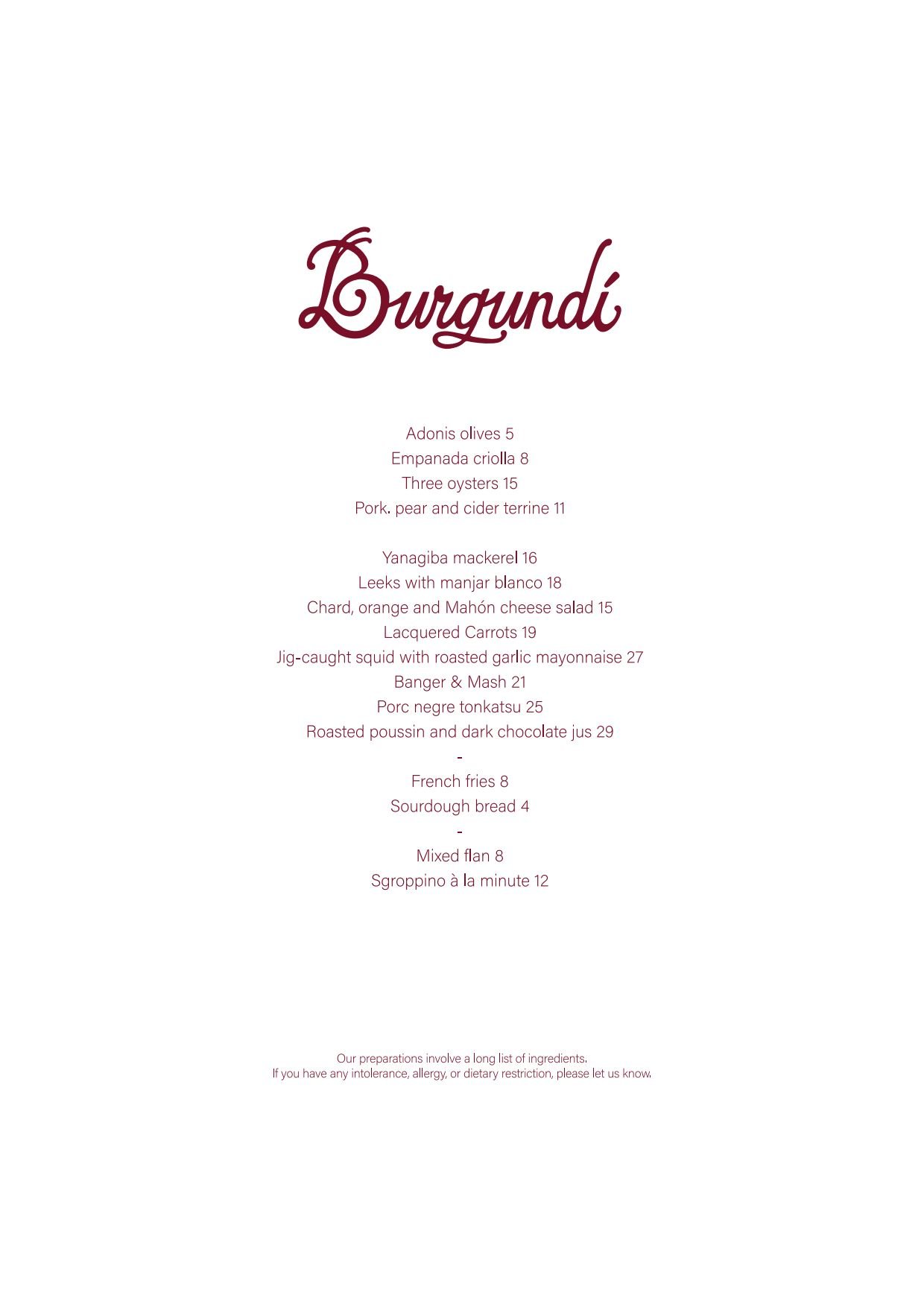
Burgundi is a compact wine bar on Carrer del Bisbe Perelló that centres its offer around local, natural, and small-producer wines from Mallorca and beyond. The kitchen supports the glass with a focused snack and dining menu. Behind the project is Borja Triñanes, who earned a Sol Repsol for his previous Palma venture, Sala de Pers, lending the bar a credibility that reaches beyond the neighbourhood.
A Different Kind of Wine Bar in Palma's Old Quarter
Palma's drinking culture has been shifting quietly for several years. The city that once ran on Aperol spritzes by the port and anonymous house wine in tourist-facing tapas bars has produced a second wave of more considered venues, particularly in the streets threading through the old city around Sant Miquel and the Casc Antic. Carrer del Bisbe Perelló sits inside that zone, and Burgundi lands on it as a bar that is resolutely facing inward toward a local, producer-led model rather than outward toward the mass-market summer visitor.
The format is deliberate: a small room, a carefully edited wine list, and a kitchen that earns its place alongside the glass rather than serving as an afterthought. That kind of discipline is more common in Barcelona's Eixample or Madrid's Malasaña than it has historically been in Palma, but venues like Burgundi are narrowing that gap. For context across the island, La Margarete in Ciutadella and Garden Bar in Calvia each work in their own registers, but Burgundi's particular focus on natural and small-producer wine places it in a more specialist tier within Mallorca's current bar scene.
Where the Wine Comes From, and Why That Matters
The wine list at Burgundi operates around a clear sourcing logic: local production from Mallorca, natural methods, and small producers who are unlikely to turn up on a wholesale list. That is not a trivial distinction in the Balearics. Mallorca's wine industry has restructured significantly since the 1990s, when Denominació d'Origen Binissalem and, later, Pla i Llevant began to attract serious investment and critical attention. Varieties like Prensal Blanc, Callet, and Mantonegro now appear on wine lists in Barcelona and London that would have overlooked them a decade ago.
A bar that focuses specifically on small producers within this system is making an argument: that the most interesting expressions of Mallorcan wine are not the volume labels that fill supermarket shelves in Palma or Alcúdia, but the growers working at lower yields with less intervention. It is the same argument that drives venues like CAV. vins in Palma, and like Angelita in Madrid and Boadas in Barcelona, each of which has built its identity around a specific editorial position on what is worth drinking and why. The difference is that Burgundi is doing this in a city whose bar scene is still, in parts, catching up to that conversation.
The natural wine focus also implies something about the kitchen. Bars serious about low-intervention, terroir-expressive wine tend to pair them with food that follows a similar sourcing logic: regional producers, seasonal ingredients, preparations that do not mask what the glass is doing. Whether Burgundi's menu fully realises that alignment is something each visit will answer differently, but the intent is legible from the format itself.
The Credential Behind the Project
Wine bars in new premises with no track record are a gamble anywhere. Burgundi carries a specific credential that shortens that calculus: Borja Triñanes, the figure behind the project, won a Sol Repsol for Sala de Pers, a previous Palma venture. The Sol Repsol is Spain's most recognised restaurant guide, and a Sol represents acknowledgment at a level that puts a kitchen into a defined peer category, above the mass of unlisted venues and below the two- and three-Sol operations that anchor the guide's upper tier. It is a meaningful data point in a market where Palma has a concentration of awarded restaurants but fewer awarded wine bars.
That credential does not guarantee that Burgundi will match or exceed what came before, but it does signal a kitchen sensibility that has been externally verified. In the broader context of Spain's natural wine bar scene, which stretches from Bar Sal Gorda in Seville to Bar Gallardo in Granada, a Repsol-credentialled operator opening a small, producer-focused bar is a recognisable pattern: experienced hands choosing a more intimate format after working at a higher volume or profile.
Burgundi in Palma's Current Bar Conversation
Palma's bar scene in the old city is not monolithic. Bar La Sang occupies a different register, as does Chapeau Palma and Garito Cafe, each of which draws a different crowd and serves a different function in the city's evening geography. Burgundi is not competing with a late-night café or a cocktail bar; it is targeting the specific customer who wants to drink something traceable and eat something that supports rather than interrupts the glass.
That is a narrower audience than a general-purpose bar, but it is also a more loyal one. Across Spain, the venues that have built durable reputations in the natural wine space have done so by becoming the place a particular type of drinker defaults to rather than the place everyone passes through once. The international template for this, in cities like Paris or Copenhagen, suggests that a small room, a focused list, and a kitchen that earns its credibility can sustain a business without needing to scale. Burgundi appears to be making that bet in Palma.
For visitors, the practical read is this: Burgundi on Carrer del Bisbe Perelló is the kind of bar that rewards going twice rather than once. The first visit maps the list and the format; the second tests whether the kitchen and the wine selection move together in the way that the leading small bars manage. Given the credentials involved and the sourcing logic at work, both visits are worth making. For a fuller picture of where Burgundi sits in the city's offer, the full Palma de Mallorca restaurants guide places it alongside the broader range of options across neighbourhoods and categories.
Compared to the higher-volume, internationally branded wine experiences that dominate the city's tourist-facing streets, Burgundi operates on a different scale entirely. For those who follow natural wine closely, the Mallorcan producers on a list like this can serve as a useful map of what the island's smaller appellations are doing at their more serious end. For those new to the category, a bar with this level of curation and this kind of kitchen background is a reasonable place to start that education, without the formality that a full restaurant tasting format would impose. Internationally, Bar Leather Apron in Honolulu offers a useful contrast in how a small, credential-backed bar builds a specific identity in a market where the default offer runs elsewhere.
Frequently Asked Questions
- How would you describe the overall feel of Burgundi?
- Burgundi sits at the more considered end of Palma's bar scene: a compact room, a short and carefully chosen wine list, and a kitchen that operates in service of the glass rather than independently of it. Given that Borja Triñanes earned a Sol Repsol at his previous project, Sala de Pers, the bar carries a level of culinary credibility unusual for a wine-focused format in Palma. It is not a destination for a long, loud evening; it is better read as a place for two or three glasses chosen with purpose and food that matches that intent. The price positioning is not confirmed publicly, but the small-producer, natural wine focus typically places a bar in the mid-to-upper range for Palma.
- What cocktail do people recommend at Burgundi?
- Burgundi's identity is built around wine rather than cocktails, specifically local, natural, and small-producer bottles. The kitchen and the list appear to have been designed together with that focus, and the Sol Repsol credential behind the project reinforces a food-and-wine rather than spirits-led offer. If you are visiting primarily for cocktails, other Palma bars serve that function more directly. If you are visiting for wine, particularly bottles from Mallorcan producers working with lower-intervention methods, Burgundi is the more appropriate choice.
Recognized By

Similar venues by awards
Related editorial
- Best Fine Dining Restaurants in ParisFrom three-Michelin-star icons to the next generation of Parisian chefs pushing boundaries, these are the restaurants that define fine dining in the world's culinary capital.
- Best Luxury Hotels in RomeFrom rooftop terraces overlooking ancient ruins to Michelin-starred hotel dining, these are the luxury hotels that make Rome unforgettable.
- Best Cocktail Bars in KyotoFrom sleek lounges to hidden speakeasies, Kyoto's cocktail scene blends Japanese precision with global influence in ways you won't find anywhere else.
Save or rate Burgundi on Pearl
Keep this venue in your Pearl passport, rate it after you visit, and track it alongside every other place you collect.