
Bar in Seville, Spain
Bar Sal Gorda
100ptsCoarse-Salt Traditionalism
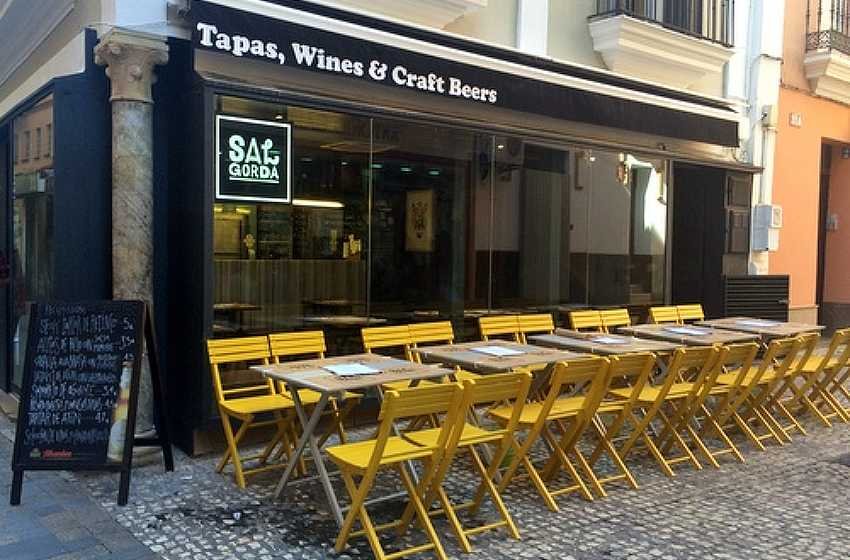
About Bar Sal Gorda
Bar Sal Gorda occupies a tight corner of Seville's Casco Antiguo, on Calle Alcaicería de la Loza, where the old silk market once operated. The bar draws a crowd that knows what it wants: a drink mixed with some thought, in a room that hasn't been stage-dressed for tourists. It sits in the smaller, more considered tier of Seville's bar scene, where what's in the glass matters more than the size of the neon sign above the door.
A Corner of the Casco Antiguo That Still Has Its Edge
Seville's Casco Antiguo is one of the most walked neighbourhoods in Andalusia, and that density of foot traffic has sorted its bars into two rough camps: those that perform Spanishness for visitors, and those that simply exist for the people who live and drink there. Calle Alcaicería de la Loza, a narrow street that takes its name from the Moorish silk market that once occupied this quarter, sits close enough to the cathedral district to catch passing trade but retains the slightly unpolished feel of a street that residents still use as a shortcut. Bar Sal Gorda sits on this street, and the address alone tells you something about its orientation.
Approaching from the cathedral end, the transition is quick. The souvenir gradient drops off, the street narrows, and the light changes from the wide brightness of the tourist plazas to something more enclosed and specific. This is the kind of entrance that pre-sorts a room's clientele before anyone has ordered a drink.
Seville's Bar Tradition and Where Sal Gorda Sits Within It
Seville operates one of the most codified bar cultures in Spain. The city's relationship with sherry-based drinking, vermouth service, and the tapa-as-social-contract is older than most European cocktail traditions by several centuries. What has shifted in the past decade is the emergence of a smaller tier of bars that maintain the social function of the traditional Sevillano bar while applying more deliberate thinking to what goes into the glass. This is not Seville reinventing itself; it is Seville adding a layer without discarding the foundation.
That pattern is visible across the city's older quarters. Bar Alfalfa works a similar register in the Alfalfa neighbourhood, and Bar Catedral holds its own position closer to the cathedral perimeter. Bar Garlochí takes a more theatrical approach on Calle Boteros, leaning into Semana Santa iconography as its design language. Bar Sal Gorda operates without that kind of visual statement, which in itself signals something about its priorities.
The Drinks Programme: Technique Inside a Traditional Frame
The name Sal Gorda translates roughly as coarse salt, a working-kitchen term rather than a fine-dining flourish. That pragmatic self-description carries through to how the bar approaches its drinks. In the broader Spanish cocktail context, the most technically ambitious programmes have concentrated in Madrid and Barcelona. Angelita in Madrid has built one of the country's most documented wine-and-cocktail hybrid programmes, and Boadas in Barcelona represents a different strand of the tradition entirely, one rooted in decades of institutional practice. Seville's contribution to this national conversation has historically been quieter, filtered through the sherry-producing infrastructure of the wider province and a local culture that has never needed external validation for its drinking habits.
Within that context, bars in the Casco Antiguo that engage seriously with their drinks list occupy a specific niche. The materials available to them are genuinely strong: fino and manzanilla from the Marco de Jerez, local vermouths, and a citrus tradition that predates the cocktail in any modern sense. A bar that draws on these materials with some structural intention rather than defaulting to gin-and-tonic as the creative horizon is working in a more interesting register than the category might suggest from the outside.
The broader Spanish island and coastal bar scene offers comparisons worth noting. Garito Cafe in Palma de Mallorca and Garden Bar in Calvia operate in environments where the drinks programme competes with the view and the season. La Margarete in Ciutadella works a more intimate format. What distinguishes an urban Andalusian bar from these coastal models is that the room itself has to carry the experience without environmental support. The quality of the pour matters more when there is no terrace sunset doing half the work.
Placing Sal Gorda in the Wider Andalusian Picture
Across Andalusia, the pattern of technically serious small bars is consistent enough to constitute a recognisable category. Bar Gallardo in Granada occupies a comparable position in that city's Realejo district, where the bar's identity is built on consistency and local loyalty rather than international recognition. The absence of major awards in Seville's cocktail bar sector is partly structural: the city's hospitality infrastructure has always weighted its recognition toward tapas culture and flamenco venues rather than drink-led programming. That means bars operating at a genuine level of care exist in a recognition gap that doesn't reflect their actual quality relative to peers in other cities.
For context on what a technically serious bar programme can look like in a non-European city, Bar Leather Apron in Honolulu demonstrates how a geographically peripheral bar can build a credible programme outside the main recognition circuits. The parallel for Seville is instructive: distance from the awards infrastructure does not mean absence of quality, it means the quality is harder to verify from the outside.
The Neighbourhood as Context
The Alcaicería quarter of the Casco Antiguo has layers that most visitors don't stop long enough to read. The silk market reference in the street name points to a commercial history that ran through the Moorish period and into the early modern era, when Seville was the point of entry for goods moving between the New World and Europe. What remains is a compressed urban texture: narrow streets, irregular building heights, and the kind of spatial intimacy that makes a small bar feel complete rather than cramped. Café Red House works in this same neighbourhood register, occupying a different slot in the area's social geography.
The practical question for anyone considering Bar Sal Gorda is timing. Seville's bar culture runs late by northern European standards: serious drinking starts after nine in the evening, and the room's character shifts significantly between early-evening and late-night configurations. The address on Calle Alcaicería de la Loza, 23 is the reliable anchor for planning; phone and booking details are not publicly listed, which in the Sevillano context generally means walk-in is the expected mode of arrival. Evenings from Thursday through Saturday run densest, and the city's bar scene does not meaningfully slow until well past midnight. For a fuller picture of what surrounds Sal Gorda in the city, the EP Club Seville guide maps the neighbourhood's bars and restaurants with the context that a single-venue visit benefits from.
Frequently Asked Questions
- What do regulars order at Bar Sal Gorda?
- The bar's setting in the Casco Antiguo and its positioning within Seville's considered bar tier suggests a drinks list that draws on local sherry-based ingredients and traditional Andalusian materials. Without confirmed menu data, the safest approach is to ask what's behind the bar that evening and let the response guide the order.
- What's the main draw of Bar Sal Gorda?
- The bar occupies a specific position in Seville's drinking culture: a small, serious room in a historically layered neighbourhood, operating outside the tourist-facing tier without advertising the fact. In a city where bar quality varies significantly by street rather than by district, the address on Calle Alcaicería de la Loza places it in an area with consistent local credibility. Pricing information is not publicly confirmed, but the venue's profile aligns with mid-range Sevillano bar economics rather than the premium end.
- Can I walk in to Bar Sal Gorda?
- Walk-in is the standard mode at this type of Sevillano bar. No booking platform or reservation phone number is publicly listed, which is consistent with the informal, locals-first operating model common in the Casco Antiguo. Arriving before ten on busy evenings gives the leading chance of finding space without a wait.
- Who is Bar Sal Gorda leading for?
- Visitors who already know Seville's bar scene well enough to be bored by the obvious options, and first-timers who have specifically sought out local-facing venues rather than the cathedral-adjacent tourist circuit. The bar's character and location make it a poor match for anyone looking for English menus, souvenir cocktail names, or high-volume nightlife. It is a better fit for drinkers who treat the glass as a reason to sit still for a while.
- How does Bar Sal Gorda fit into Seville's sherry culture?
- Seville sits at the edge of the Marco de Jerez, the sherry-producing triangle that runs through Jerez de la Frontera, Sanlúcar de Barrameda, and El Puerto de Santa María. Bars in the Casco Antiguo with serious drinks programmes often engage with fino, manzanilla, and amontillado as working ingredients rather than heritage footnotes. Bar Sal Gorda's positioning in this neighbourhood tier suggests it operates within that tradition, making it a reasonable point of entry for visitors interested in how sherry functions in an urban Sevillano bar context rather than a bodega tasting room.
Related editorial
- Best Fine Dining Restaurants in ParisFrom three-Michelin-star icons to the next generation of Parisian chefs pushing boundaries, these are the restaurants that define fine dining in the world's culinary capital.
- Best Luxury Hotels in RomeFrom rooftop terraces overlooking ancient ruins to Michelin-starred hotel dining, these are the luxury hotels that make Rome unforgettable.
- Best Cocktail Bars in KyotoFrom sleek lounges to hidden speakeasies, Kyoto's cocktail scene blends Japanese precision with global influence in ways you won't find anywhere else.
Save or rate Bar Sal Gorda on Pearl
Keep this venue in your Pearl passport, rate it after you visit, and track it alongside every other place you collect.