
Bar in Fort Worth, United States
Angelo's Bar-B-Que
100ptsNeighborhood Pit Consistency
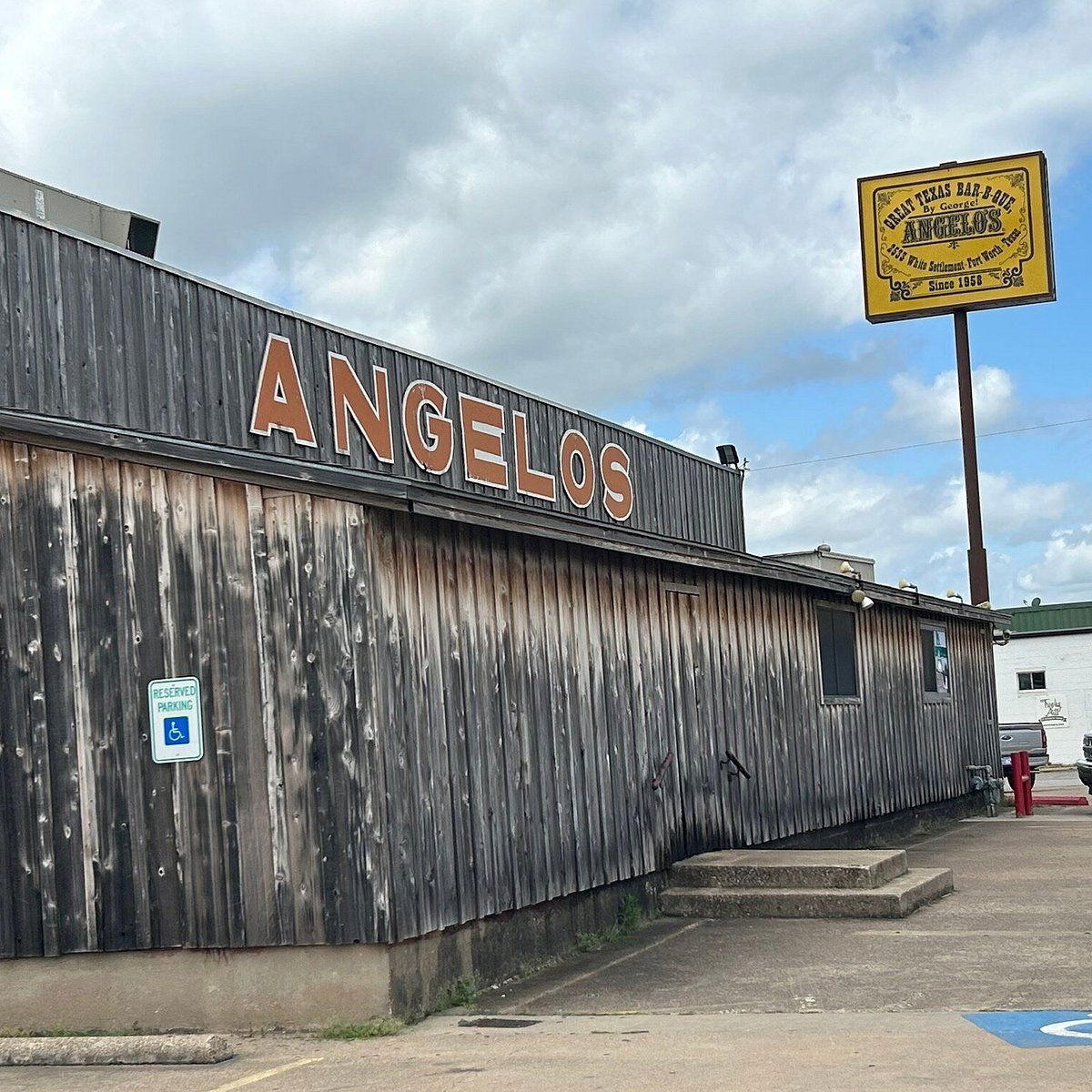
About Angelo's Bar-B-Que
Angelo's Bar-B-Que on White Settlement Road is a fixture of Fort Worth's barbecue tradition, occupying a stretch of the city where smoke-forward cooking has long defined the neighborhood's identity. The pit-driven format here places it within a lineage of Texas barbecue houses that prize technique and consistency over spectacle. A reference point for anyone mapping the city's smoked-meat geography.
Smoke on White Settlement Road
White Settlement Road runs west through a part of Fort Worth that has resisted the polish applied to the Stockyards or the Cultural District. The buildings are low, the signage is practical, and the cooking that happens here tends to be answerable to regulars rather than to reviewers. Angelo's Bar-B-Que sits on this stretch at 2533 White Settlement Rd, and its address alone signals something about the kind of barbecue operation it represents: rooted in a working neighborhood, operating outside the orbit of food-tourism circuits that have reshaped pit culture in Dallas and Austin over the past decade.
Texas barbecue, as a tradition, has always split between the performative and the functional. The performative end involves queues that begin before dawn, limited quantities that sell out by noon, and a vocabulary borrowed from fine dining. The functional end operates on volume, reliability, and the assumption that the person coming through the door already knows what they want. Angelo's belongs to the functional tradition, and that distinction shapes everything about the experience, from the moment you approach the building to the sequence in which the meal unfolds.
The Arc of the Plate
Framing a Texas barbecue meal as a tasting progression requires a shift in critical vocabulary. There are no courses announced by a server, no pacing dictated by a kitchen brigade. The progression is self-assembled at the counter, and the discipline lies in the ordering: what you take, in what quantity, and in what combination. This is where knowledge of the format matters more than any printed menu.
At a pit-forward house, the sequence typically begins with something that cuts through smoke rather than amplifying it. Pickles, raw onion, and white bread are not afterthoughts in Texas barbecue; they function as palate resets between heavier items, performing the role that an acidic amuse or a sorbet course plays in a longer tasting format. The brine of a pickle against the fat of well-rendered brisket is a deliberate contrast, not a garnish.
The weight of the meal builds through the protein choices. Brisket, where the flat and point sections behave differently on the plate, represents the technical center of any serious Texas pit program. The flat slices cleanly and carries smoke without excessive fat; the point, fattier and more forgiving in the cooking, delivers a richer result. Sausage links, which at their leading snap on the cut and release a tightly emulsified interior, introduce a different fat register. Ribs, if the pit timing is right, should release from the bone with pressure rather than fall away from it, a distinction that separates a well-managed fire from one that has run too hot or too long.
The supporting elements, beans, coleslaw, potato salad, close the arc. These are comfort anchors, not decorative sides, and in a strong barbecue program they carry the seasoning that pulls the meal into coherence. The sequence, if you assemble it correctly, moves from brightness through fat through smoke through starch, and the result is a meal with genuine structural logic.
Where Angelo's Sits in the Fort Worth Picture
Fort Worth's eating scene has diversified considerably over the past several years. The stretch around the Cultural District now supports wine-forward Italian formats like 61 Osteria and neighborhood Italian in the form of Aventino's Italian Restaurant. Burger operations like Big Kat Burgers at Crystal Springs Hideaway represent a more casual register, and spirits-focused venues such as Blackland Distillery have added a craft-production dimension to the city's drink scene. Against this spread, Angelo's represents a distinct category: the long-running pit house that anchors a neighborhood's culinary identity rather than contributing to its reinvention.
That positioning is neither a limitation nor a selling point in the promotional sense. It is simply an accurate reading of what the venue is and what function it performs in the city's eating geography. For a fuller map of where Angelo's fits alongside Fort Worth's other significant addresses, the full Fort Worth restaurants guide provides useful orientation across price tiers and formats.
The Broader Frame: Regional Pit Culture
Texas barbecue operates as one of the most geographically specific cooking traditions in American food. The Central Texas model, centered on post-oak smoke and minimal rubs, differs materially from East Texas styles that lean toward sauce and longer-cooked, falling-apart textures. Fort Worth sits at a regional crossroads, close enough to both traditions that individual operations tend to reflect a blend rather than a strict alignment.
The pit-house format that Angelo's represents has faced structural pressure from two directions over the past decade. On one side, the rise of destination barbecue, driven by media attention and food-tourism infrastructure, has concentrated audiences around a smaller number of high-profile operations. On the other, rising meat costs have tightened margins at exactly the kind of neighborhood operation that historically kept prices accessible. The houses that persist through this pressure tend to do so through operational efficiency and a loyal local base rather than through trend positioning.
For comparative reference across the broader American bar and dining scene, the range of what serious independent operators are doing is instructive. Programs like Jewel of the South in New Orleans or Julep in Houston illustrate how regionally rooted operations hold their ground by committing to a specific tradition rather than diluting it. The same logic applies in barbecue. The pit houses that matter over decades are those that resist the temptation to reinvent and instead sharpen what they already do well.
Internationally, the conversation around serious independent food and drink operations spans from Kumiko in Chicago to Bar Leather Apron in Honolulu, Superbueno in New York City, ABV in San Francisco, and The Parlour in Frankfurt on the Main. What connects these operations across format and geography is a commitment to a defined point of view, maintained consistently over time. Angelo's occupies a different register, but the underlying logic is the same.
Planning Your Visit
Angelo's is located at 2533 White Settlement Rd in Fort Worth, west of downtown and accessible by car from the Cultural District in under ten minutes. No current booking method, hours, or pricing details are available through EP Club's verified data, so confirming current operating times before visiting is advisable. The White Settlement Road address is not a high-foot-traffic corridor, which means parking is typically direct. The venue operates in a format, counter service, casual seating, that requires no reservation and no particular dress consideration. The practical discipline here is timing: arriving with some understanding of what you want to order, and in what combination, produces a more coherent meal than approaching the counter without a plan.
Frequently Asked Questions
What's the must-try cocktail at Angelo's Bar-B-Que?
Angelo's Bar-B-Que is a pit barbecue operation rather than a cocktail-focused venue, and there is no verified data in EP Club's records about a specific drinks program. For serious cocktail programs in the region, Blackland Distillery in Fort Worth offers a spirits-production context worth exploring alongside a barbecue-focused itinerary.
What's Angelo's Bar-B-Que leading at?
Angelo's primary identity is as a neighborhood pit house on Fort Worth's White Settlement Road, a format that prizes consistency and accessibility over destination spectacle. Within that category, the smoked-meat program, built around the Central Texas tradition of minimal intervention and wood-fire technique, is the core offering. For context on where Angelo's sits within Fort Worth's wider eating scene, the full Fort Worth restaurants guide provides a broader picture across formats and price points.
Is Angelo's Bar-B-Que a good option for first-time visitors to Fort Worth's barbecue scene?
Angelo's on White Settlement Road represents the functional, neighborhood-anchored end of Fort Worth's barbecue tradition rather than the destination-oriented end that draws media attention, which makes it a useful introduction to the city's everyday pit culture. First-time visitors benefit from understanding the counter-service format before arriving: decide on your protein combination in advance, and treat the pickle-and-bread accompaniments as structural elements of the meal rather than optional extras. No reservation is required, and the address is accessible from the Cultural District and downtown Fort Worth.
Related editorial
- Best Fine Dining Restaurants in ParisFrom three-Michelin-star icons to the next generation of Parisian chefs pushing boundaries, these are the restaurants that define fine dining in the world's culinary capital.
- Best Luxury Hotels in RomeFrom rooftop terraces overlooking ancient ruins to Michelin-starred hotel dining, these are the luxury hotels that make Rome unforgettable.
- Best Cocktail Bars in KyotoFrom sleek lounges to hidden speakeasies, Kyoto's cocktail scene blends Japanese precision with global influence in ways you won't find anywhere else.
Save or rate Angelo's Bar-B-Que on Pearl
Keep this venue in your Pearl passport, rate it after you visit, and track it alongside every other place you collect.