
Bar in Vienna, Austria
Amerlingbeisl
100ptsViennese Beisl Tradition
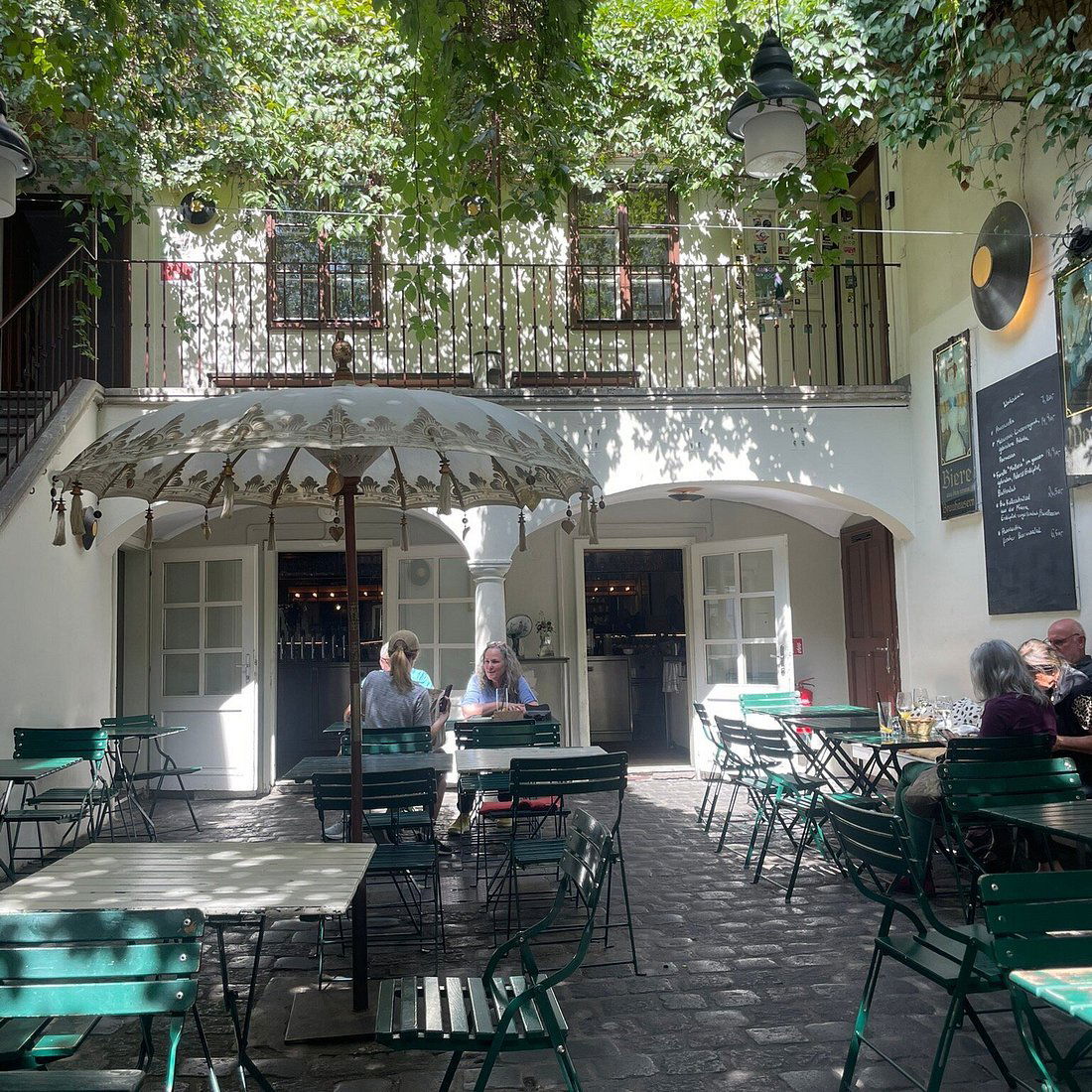
About Amerlingbeisl
Amerlingbeisl occupies a courtyard address on Stiftgasse 8 in Vienna's seventh district, the Neubau, where the city's Biedermeier-era Beisl tradition meets a neighbourhood that has shifted decisively toward independent creative culture. The format sits within a category of Viennese eating houses that resist rigid classification, where the menu structure tells a more honest story about the place than any single dish could.
Neubau's Eating House Tradition
Vienna's seventh district has undergone a quieter transformation than the more photographed first. Neubau's streets, running between the MuseumsQuartier and the Westbahnstrasse corridor, now hold a concentration of independent bars, galleries, and eating houses that operate on local rhythms rather than tourist schedules. The Beisl format, Austria's answer to the neighbourhood bistro, fits this district particularly well. These are not fine-dining rooms with tableside ceremony, nor are they mere taverns. They occupy a middle register where the menu does the cultural work, carrying regional tradition while absorbing whatever the neighbourhood brings in.
Amerlingbeisl, on Stiftgasse 8, sits inside this pattern. The address is within a short walk of the 25hours Hotel Vienna at MuseumsQuartier, which anchors the western edge of the arts district, and the proximity matters for understanding the venue's position. This is not the tourist-facing inner city. Stiftgasse runs through a block where residents, studio workers, and the occasional architecture student from the nearby university form the default audience.
What the Courtyard Tells You Before You Order
The physical approach to an eating house like this one communicates more about its category than any menu heading. Viennese Beisln that have survived as genuine neighbourhood institutions rather than theme-park versions of themselves tend to share certain spatial qualities: courtyard access, a certain roughness in the materials, and a preference for outdoor seating that extends the season as far as the climate allows. The transition from street to interior in these places is rarely abrupt. There is usually an intermediate zone, a passage, a garden, a half-covered terrace, where the logic of inside and outside blurs. That spatial generosity is part of what distinguishes the format from a restaurant in the conventional sense.
That reading of space directly informs how menus in this category are written. Beisl menus are not structured around tasting progressions or kitchen showmanship. They are structured around availability, season, and the capacity to feed people who come back regularly rather than once. The architecture of the menu, in other words, is designed for habitual use, not for a single-occasion performance.
Menu Architecture as Argument
The most instructive thing about a Beisl menu is what it refuses to do. Where a contemporary European restaurant might build courses around a single protein or a single flavour principle, the Beisl format spreads horizontally. Soup, a cold plate, a hot main, a strudel or pudding: the structure is cumulative rather than narrative. No single dish is meant to carry the conceptual weight. The kitchen's argument, if it has one, is made through consistency and proportion rather than through any individual flourish.
This matters for how you should approach the room. Ordering one dish and leaving is technically possible but misses the format's logic entirely. The meal is built in layers, and the middle courses, the warm starters, the daily specials written on a board rather than printed, carry as much information about the kitchen's current thinking as anything else on the menu. In a well-run Beisl, those middle courses are where the cook is actually improvising within the tradition rather than executing a fixed script.
Vienna's Beisl tradition has parallels elsewhere in the German-speaking world, including at places like Landhauskeller in Graz, where regional eating house formats carry similar structural logic, and in the beer hall tradition represented by Augustiner Bräu Mülln in Salzburg. Each of those contexts has its own regional inflection, but the underlying principle, a horizontally structured menu designed for repeat visits rather than occasions, is consistent across the tradition.
The Drinks Column
In the Beisl format, the drinks list functions as a parallel menu rather than a supplement. Austrian wine, particularly Grüner Veltliner and Zweigelt, occupies the same structural position as the daily special: it changes with production, it is priced for regular consumption rather than occasion spending, and it is expected to work with food rather than precede or follow it. The distinction between a wine bar and a Beisl in Vienna is partly a question of which list runs longer. At an eating house, the food menu is primary and the wine list is its companion.
For those interested in how Vienna's bar and drinks culture operates in different registers, the contrast with venues like Blue Mustard, Alte Donau, or Bar Tabacchi is clarifying. Those rooms are built around the drink as the primary offering. A Beisl inverts that hierarchy without dismissing the glass.
How Neubau Shapes the Experience
The seventh district's shift toward independent creative culture has not erased its residential character, and that coexistence shapes what works there. A venue on Stiftgasse is not competing with the first district's grand cafes or the second district's market-adjacent wine bars. It is competing, implicitly, with the kitchen at home, with the habit of picking up something from the market, with the general Viennese disposition toward making a proper sitting-down meal rather than eating on the move.
That competitive context is what makes menu discipline important in this category. The Beisl that survives in a neighbourhood like Neubau does so because it offers something the home kitchen cannot easily replicate at the same price point: a properly rendered Tafelspitz, a Zwiebelrostbraten with the right depth of sauce, a Topfenstrudel that requires neither advance planning nor equipment. The menu is, in that sense, a direct answer to a specific domestic gap.
For those planning a broader circuit through Austria's eating and drinking culture, venues like Carinthia Weinbar in Velden am Wörthersee, Hotel Schwarzer Adler Innsbruck, Achen Lake in Eben Am Achensee, and Red Bull Hangar-7 in Himmelreich each represent different registers of Austrian hospitality that sit in their own peer sets, distinct from the Beisl format but useful as points of comparison when mapping the country's range. Internationally, Bar Leather Apron in Honolulu demonstrates how a comparable commitment to format discipline can operate in an entirely different culinary context.
Planning Your Visit
Amerlingbeisl is on Stiftgasse 8 in Vienna's seventh district, accessible on foot from the MuseumsQuartier within a few minutes and well-served by the U3 line at Volkstheater or Zieglergasse. Like most Neubau eating houses, the venue follows rhythms that are more neighbourhood than tourist-facing: lunch trade from local workers, an early evening shift, and a later sitting that runs well into the night on weekends. For current hours, booking options, and seasonal menu information, direct contact with the venue is the reliable route, as these details shift with the season and the staffing calendar. See our full Vienna restaurants guide for broader context on where Amerlingbeisl sits within the city's wider eating and drinking map.
Frequently Asked Questions
- What's the must-try cocktail at Amerlingbeisl?
- Amerlingbeisl operates in the Beisl register rather than as a cocktail bar, so the drinks programme centres on Austrian wine and beer rather than a mixed drinks list. For Viennese venues with dedicated cocktail programmes, the EP Club's Vienna guide maps the city's bar scene across several formats, from the 25hours Hotel Vienna at MuseumsQuartier to neighbourhood-level options in the seventh district.
- What makes Amerlingbeisl worth visiting?
- The venue's value is structural rather than occasion-specific. Neubau's seventh district holds few eating houses that operate on the full Beisl format at a price point suited to repeat visits, and Stiftgasse 8 is within walking distance of the MuseumsQuartier without the tourist-facing pricing that often accompanies that proximity. The city's Beisl tradition has thinned considerably in inner districts over the past decade, making seventh-district addresses in this category a more reliable reference point than the first or fourth.
- Is Amerlingbeisl suitable for a long, leisurely dinner in the Viennese style?
- The Beisl format is, by design, built for extended sitting rather than quick service. Vienna's eating house tradition assumes that a table is held for the duration of a meal, courses arrive at a pace set partly by the kitchen and partly by the diner, and the expectation of a dessert and a final drink is baked into the room's rhythm. For visitors arriving from cities where tables turn on tight schedules, the Viennese Beisl pace, including Amerlingbeisl's position in a courtyard setting that encourages lingering, represents a deliberate counter-programme.
Related editorial
- Best Fine Dining Restaurants in ParisFrom three-Michelin-star icons to the next generation of Parisian chefs pushing boundaries, these are the restaurants that define fine dining in the world's culinary capital.
- Best Luxury Hotels in RomeFrom rooftop terraces overlooking ancient ruins to Michelin-starred hotel dining, these are the luxury hotels that make Rome unforgettable.
- Best Cocktail Bars in KyotoFrom sleek lounges to hidden speakeasies, Kyoto's cocktail scene blends Japanese precision with global influence in ways you won't find anywhere else.
Save or rate Amerlingbeisl on Pearl
Keep this venue in your Pearl passport, rate it after you visit, and track it alongside every other place you collect.