
Bar in London, United Kingdom
Academy
50ptsProgramme-Led Cocktail Authority

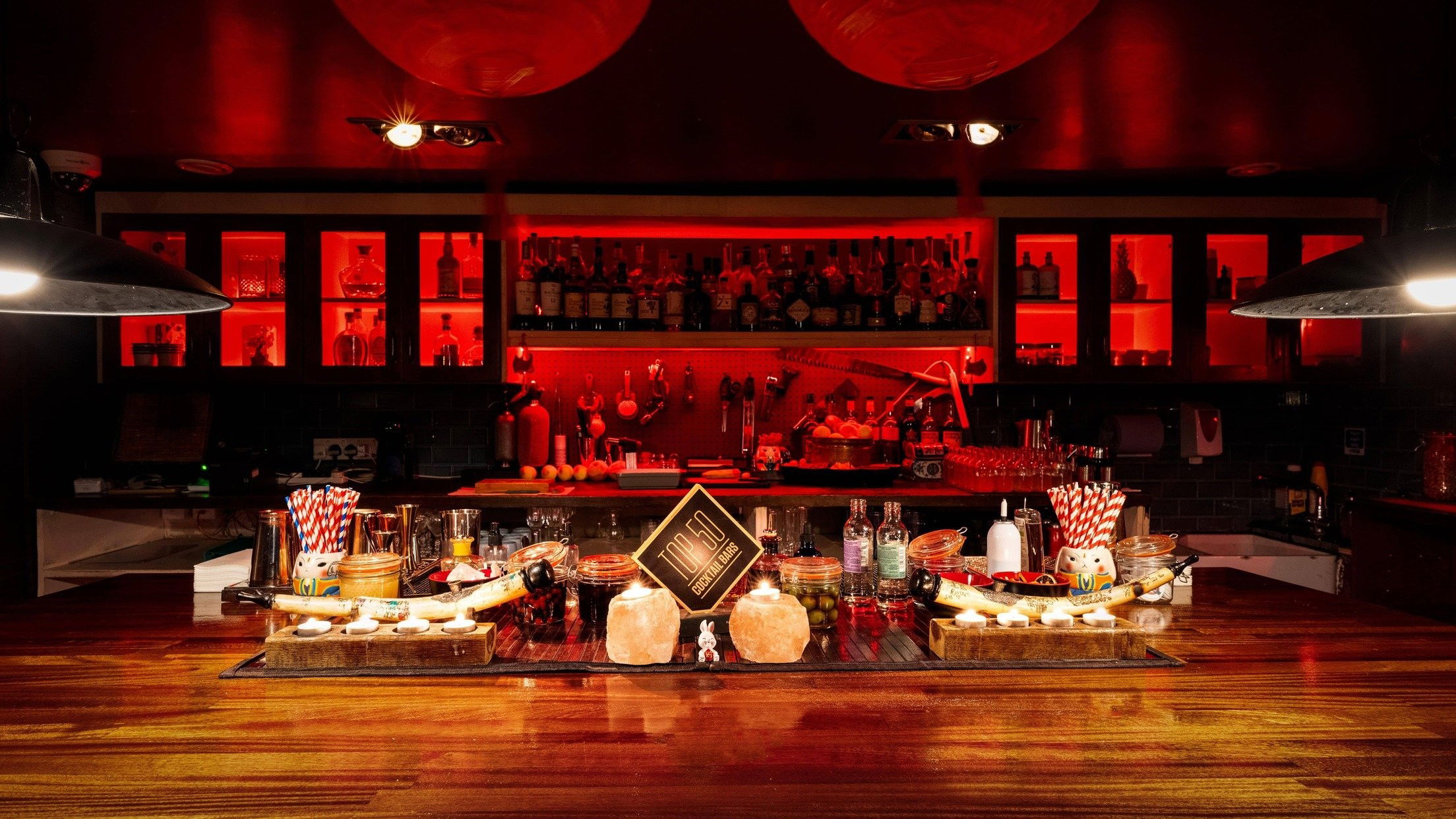
About Academy
A Bloomsbury bar that reached number 10 on the World's 50 Best Bars list in 2010, Academy sits on Gower Street with a Google rating of 4.1 across more than 400 reviews. Its placement in that era's global rankings puts it alongside a cohort of London bars that helped define the city's serious cocktail identity before the current wave of technically-led programmes took hold.
Bloomsbury's Quiet Authority
Gower Street is not where you go looking for cocktail bars. The street runs through the academic heart of London, flanked by UCL buildings and Georgian terraces, with foot traffic that skews toward students and hospital workers rather than the late-night circuit of Soho or Shoreditch. That Academy operates here, and reached number 10 on the World's 50 Best Bars list in 2010, says something about how seriously the bar was taken at the time — and about the kind of drinker it attracted. Bars that place in that ranking from a residential-academic postcode are not doing so on passing trade. They earn it on reputation and repeat visits from people who know what they want.
The 2010 ranking places Academy in a specific and now historically significant moment for London's bar scene. That period, roughly 2008 to 2013, is when the city consolidated its position as one of the defining cocktail capitals outside of New York. Bars like 69 Colebrooke Row and Nightjar were building programmes that prioritised technical rigour and original thinking over the template-driven menus that had dominated the early 2000s. Academy sat inside that same movement, with a WC1E address that kept it deliberately apart from the more theatrical end of the scene.
What the 50 Best Ranking Actually Signals
A top-ten placement on the World's 50 Best Bars list carries specific weight when you understand how the list works. It is compiled through industry peer voting, which means other bartenders and bar professionals are the primary judges. A bar does not reach that position through marketing spend or venue design alone. It reaches it because working professionals in the same field consider it credible, technically sound, and worth recommending to peers. For Academy to hold that position in 2010, from a Bloomsbury address without the obvious advantages of a high-footfall location or hotel-backed infrastructure, indicates a drinks programme that commanded genuine respect inside the trade.
Across the United Kingdom, a handful of bars have achieved comparable recognition in that era and since. Bramble in Edinburgh, Merchant Hotel in Belfast, and Schofield's in Manchester each represent their cities with the same kind of programme-led seriousness. Academy belongs to that national cohort, the bars that built London's case, alongside cities across the UK, for a cocktail culture that could compete with the established centres of New York and Tokyo.
Menu Architecture and What It Reveals
The editorial angle on any bar at this level is the menu — not as a list of drinks, but as a document of intent. Bars that reach the leading ten of a global ranking in the pre-social-media era did so through menus structured around clear thinking: a coherent approach to spirit selection, seasonal modification, and balance between classics and house originals. The menu functions as the primary argument the bar makes to the drinker. It tells you where the programme sits philosophically, whether it is technique-first, spirit-led, seasonally anchored, or conceptually organised around a narrative.
Academy's positioning in the 50 Best list at number 10 suggests its menu in that period made a coherent argument. Bars that reach that tier without a theatrical hook or a famous-name chef behind the pass tend to rely on the quality of their drinks thinking above all else. The Bloomsbury address reinforces this: without the theatre of a speakeasy entrance or a nightclub infrastructure, the drinks have to carry the room. That is a harder brief to execute, and its execution is what the ranking reflects.
Comparison bars in London's current scene each make different structural arguments through their menus. A Bar with Shapes For a Name organises its programme around a formalist precision that has earned it sustained attention. Amaro builds its case through a specific category focus. American Bar at the Savoy anchors its authority in historical continuity. Academy's historical positioning fits a fourth model: the neighbourhood specialist that earns its place through expertise rather than concept or location.
London's Cocktail Scene in Context
London's bar scene has changed significantly since 2010. The city has moved through the speakeasy phase, the Japanese-influenced technique phase, and into its current period, which is more pluralist: sustainability-focused programmes sit alongside high-extraction spirit work, zero-proof menus, and a renewed interest in wine-adjacent formats. The 50 Best list itself has expanded and evolved, and the bars now reaching its upper tier are responding to a more globally informed drinker with broader points of reference.
Academy's 2010 placement should be read against that context. It was part of a cohort that helped establish the expectations now taken for granted: fresh juice, house-made syrups, bartenders who can discuss spirit provenance, menus that change with reason rather than at random. Those standards have since become the baseline across London and in serious bar programmes across the country, from Horseshoe Bar Glasgow to Mojo Leeds and further afield to L'Atelier Du Vin in Brighton. The bars that built those standards in London between 2008 and 2012 are the reference points from which the current scene is measured.
A Google rating of 4.1 from 403 reviews is a useful secondary data point. It is not the score of a bar operating at the apex of current competition, but it is a consistent, positive signal across a substantial number of visits. Bars that hold a 4.1 at volume are generally doing the fundamentals reliably: service that does not frustrate, drinks that meet expectations, a room that does not actively work against the experience. For a bar in a non-obvious location like WC1E, that consistency matters more than it might in a higher-traffic area where passing visitors inflate review counts in both directions.
For a broader read on where Academy fits within London's drinking and dining options, the full London guide maps the current scene across neighbourhoods and formats.
Know Before You Go
- Address: 21 Gower St, London WC1E 6HG
- Google Rating: 4.1 (403 reviews)
- Recognition: World's 50 Best Bars #10 (2010)
- Booking: Contact details not currently listed , check the venue directly before visiting
- Getting There: Gower Street is a short walk from Euston Square, Russell Square, and Goodge Street stations
- Price Range: Not confirmed in current data , budget as you would for a London cocktail bar with serious programme credentials
Frequently Asked Questions
What should I try at Academy?
Specific current menu items are not available in verified data, so recommending named drinks would be speculative. What the awards record does confirm is that Academy built its reputation on a programme taken seriously by industry peers: the 2010 World's 50 Best Bars ranking at number 10 is a peer-voted credential, which means working bartenders across the field considered its drinks worth endorsing. A reasonable approach at a bar with that history is to ask the bartender for the house specials or the drinks that reflect the current programme most directly, rather than defaulting to a generic classic.
Why do people go to Academy?
The primary draw is the bar's track record of serious programme-building in a city that takes cocktail credibility seriously. A top-ten placement on the World's 50 Best Bars list , compiled by industry professionals, not general public vote , puts Academy in a peer set that London drinkers interested in the city's bar history recognise. Bloomsbury is not a nightlife destination in the conventional sense, which means visitors to the area tend to be purposeful rather than opportunistic. That self-selection shapes the room and the atmosphere.
Can I walk in to Academy?
No confirmed booking method or reservations policy is available in current data. Given that Academy holds a Google rating of 4.1 across more than 400 reviews, the bar maintains a consistent visitor base, but walk-in availability at any given time is not something that can be guaranteed from available information. If you are travelling specifically to visit, it is worth contacting the bar directly before making the trip, particularly on weekend evenings when demand at recognised bars in London tends to peak.
How does Academy's 50 Best ranking compare to other London bars from that era?
A number 10 position on the World's 50 Best Bars list in 2010 placed Academy inside a cohort that was defining London's international bar reputation during one of the city's most influential periods for cocktail culture. The list in that year drew from a globally competitive pool, and top-ten placement from a non-hotel, non-nightclub address in WC1 was a specific kind of achievement: it pointed to the drinks themselves as the primary credential, without the infrastructure advantages that hotel bars or high-footfall locations provide. Bars like Bar Leather Apron in Honolulu demonstrate how globally dispersed that level of recognition has since become, but in 2010 London's upper tier was a tighter, more concentrated reference point.
Recognized By

More bars in London
- Scarfes BarScarfes Bar at the Rosewood London is a serious destination in its own right, not just a hotel bar. With a 4.7 Google rating, OAD Casual Europe recognition, and a visually striking room lined with Gerald Scarfe caricatures, it earns a standalone visit. Go midweek for the best atmosphere; groups of six-plus are well accommodated.
- 155 Bar & Kitchen155 Bar & Kitchen on Farringdon Road is a straightforward bar-and-kitchen in EC1 that works best as a reliable local rather than a destination night out. Booking is easy — 24 to 48 hours ahead covers most evenings — and its central location near Farringdon station makes it a convenient stop before or after other plans. Worth knowing; not worth making your only stop.
- 45 Jermyn St.45 Jermyn St. is a wine-forward address in St. James's that rewards those who treat the by-the-glass list as the main event. Booking is easy with a few days' notice midweek, harder Thursday to Saturday. The price point is high for the area, but it's justified if a serious wine selection in a proper room is what you're after.
- 68 and Boston68 and Boston sits on Greek Street in the heart of Soho, making it one of the more accessible spirit-forward bar options in a neighbourhood that takes drinking seriously. Booking is easy by London standards — walk-ins are realistic mid-week, and even weekends rarely require more than a few days' notice. Arrive before 7:30 PM for a quieter experience; later and the room fills fast.
Related editorial
- Best Fine Dining Restaurants in ParisFrom three-Michelin-star icons to the next generation of Parisian chefs pushing boundaries, these are the restaurants that define fine dining in the world's culinary capital.
- Best Luxury Hotels in RomeFrom rooftop terraces overlooking ancient ruins to Michelin-starred hotel dining, these are the luxury hotels that make Rome unforgettable.
- Best Cocktail Bars in KyotoFrom sleek lounges to hidden speakeasies, Kyoto's cocktail scene blends Japanese precision with global influence in ways you won't find anywhere else.
Save or rate Academy on Pearl
Keep this venue in your Pearl passport, rate it after you visit, and track it alongside every other place you collect.